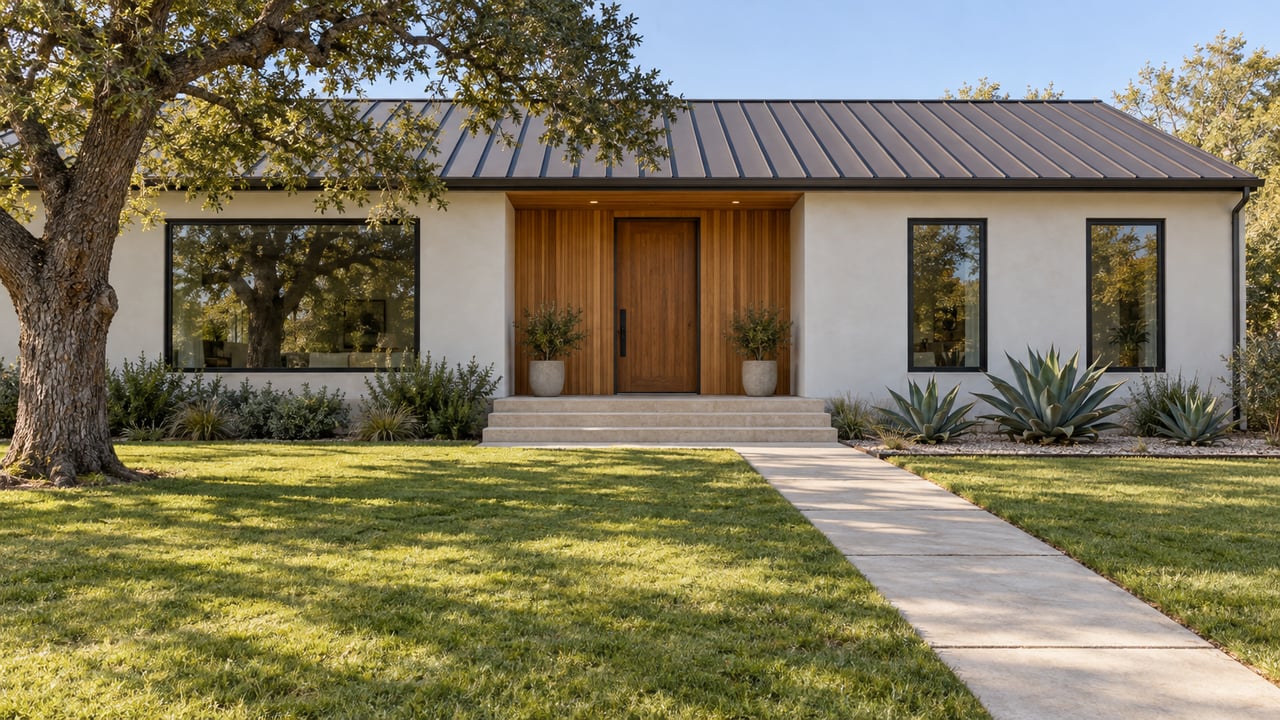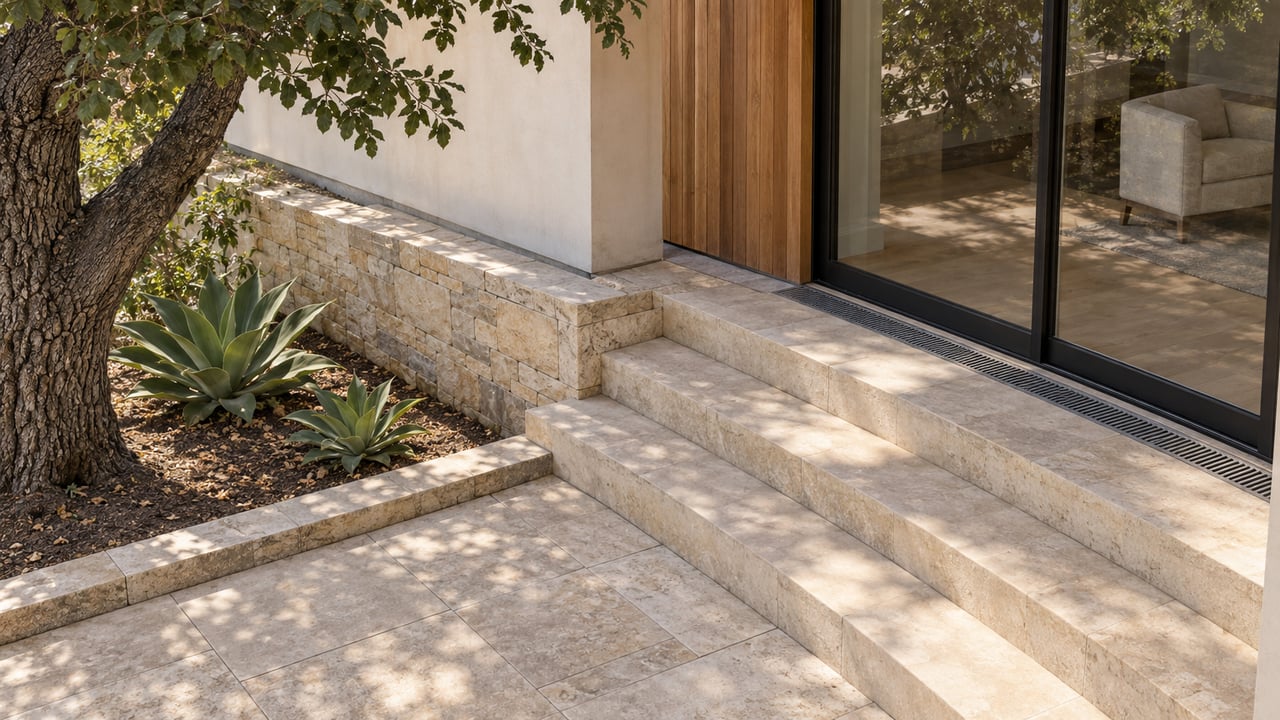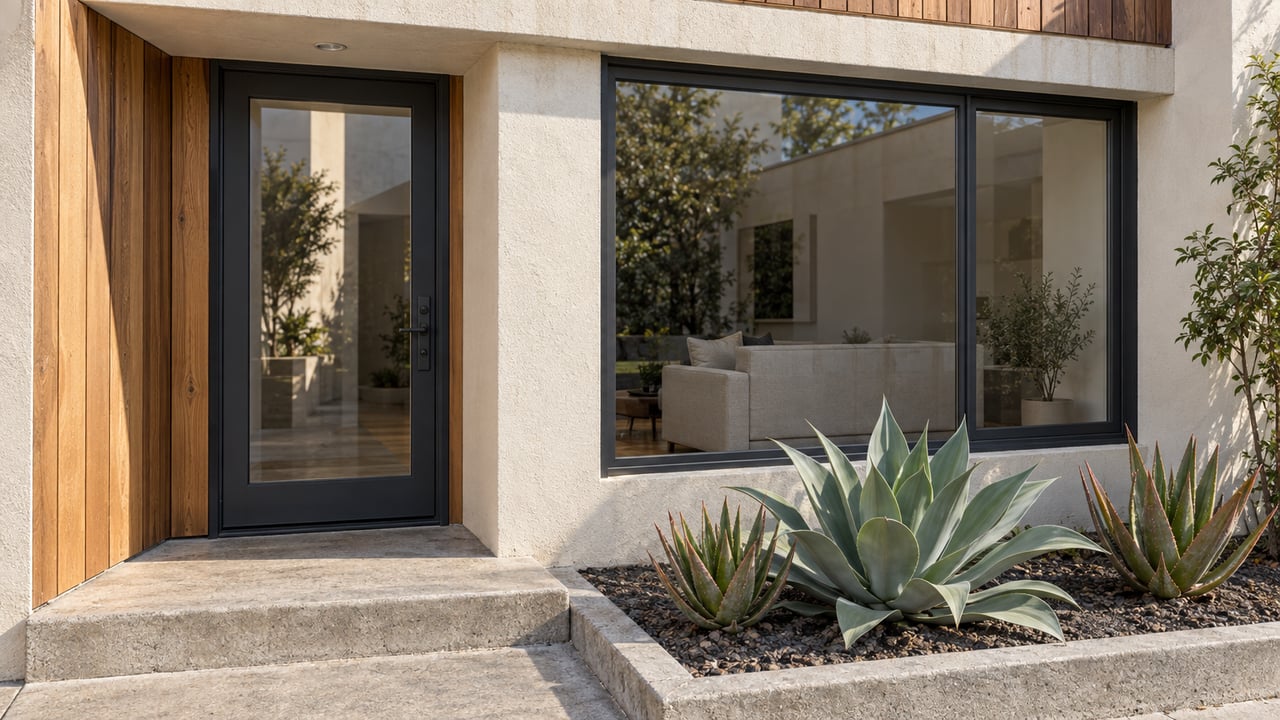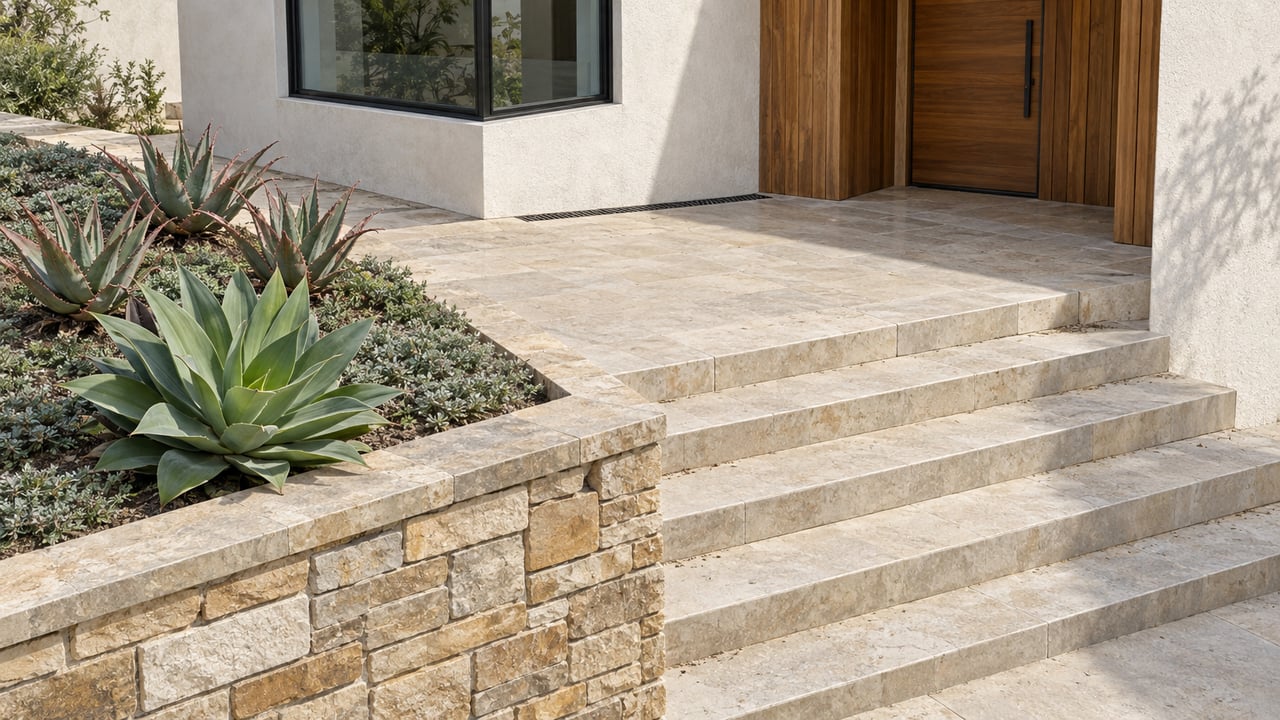
Two homes on the Doña streets, both built in the first half of the 1960s, both inside the same quarter-mile of hillside just below Mulholland Drive. One sold in April 2026 for just over $1,200 a square foot. Another, a few streets over, is on the market right now for less than $700 a square foot. Same era, same hillside, same neighborhood name on the listing sheet. The gap between them is bigger than the gap between many entirely different Los Angeles zip codes.
If you've been pricing homes in The Doñas by watching a median number float across a portal, that spread is the thing the median is hiding from you. This isn't a neighborhood with one price curve and some noise around it. It's two overlapping populations of homes that happen to share an address pattern, and knowing which one you're looking at matters more than knowing the median at all.
What actually separates a $650 home from a $1,200 one
The obvious guess is size, or view, or lot. Those matter, but they don't explain the spread on their own. What separates the low end from the high end in The Doñas is closer to a life-cycle question: has this specific house been renovated, and if so, how far did the renovation go.
The house that sold on Doña Evita Drive in April 2026 is the clean example. It's a 1960-built, 2,698-square-foot, 4-bedroom home on a corner lot, and it closed at $3,265,000, roughly 9% above its $2,995,000 asking price. The listing description leaned on 12-foot vaulted ceilings, a stone fireplace, and a floor plan that reads as a full architectural gut rather than a cosmetic refresh. That's a house priced as a finished, move-in product for a buyer who wants the mid-century shell with none of the mid-century systems.
Compare that to a restored mid-century home on Laurelwood Drive, listed as built in 1951, that came to market in mid-2026 at $2,895,000 for 3,304 square feet, or about $876 a square foot. The listing copy makes a point of noting this was the home's first appearance on the market in nearly two decades. It's still a nice number, still a real renovation, but it's not commanding the same premium as the Doña Evita sale, and the two-decade hold is the tell. A house that sat with one owner for 20 years usually carries an older renovation, an older kitchen, systems that were state of the art a while ago rather than this year.
Then there's the other end. A modern-industrial remodel on Doña Lola Drive, 2,194 square feet with a heated pool, spa, and a rooftop deck looking out toward city lights, is currently offered at $1,435,000, about $654 a square foot. It's genuinely renovated. It's just smaller, and it sits on a street the listing itself describes as quiet with limited through traffic rather than a marquee view corridor. Renovation gets you into the conversation. It doesn't guarantee you the top of the range.
The comparison, laid out
| Street | Built | Square Feet | Price (status, timing) | Price per Sq Ft | What the listing signals |
|---|---|---|---|---|---|
| Doña Evita Dr | 1960 | 2,698 | $3,265,000, sold Apr. 2026 | ~$1,210 | Full remodel, corner lot |
| Laurelwood Dr | 1951 (per MLS) | 3,304 | $2,895,000, listed mid-2026 | ~$876 | Restored, first sale in ~20 years |
| Doña Susana Dr | 1964 | 2,712 | ~$2,456,000, automated estimate, June 2026 | ~$906 | Original-era finishes likely |
| Doña Lisa Dr | 1965 | 2,541 | ~$2,492,000, automated estimate, Jul. 2026 | ~$981 | Original-era finishes likely |
| Doña Alicia Pl | 1960 | 3,725 | ~$3,024,000, automated estimate, Jul. 2026 | ~$812 | Original-era finishes likely |
| Doña Lola Dr | not stated | 2,194 | $1,435,000, active listing | ~$654 | Full remodel, smaller footprint, interior street |
| Doña Emilia Dr | not stated | 2,903 | $2,199,000, listed before coming off market by mid-2026 | ~$757 | Corner of Laurel Canyon Blvd |
The middle three rows are automated valuation estimates, not confirmed sales, so treat them as directional rather than exact. But look at what the confirmed transactions and active list prices actually do: the three renovated homes in this set produced the highest number in the table, the lowest, and one squarely in the middle. Renovation doesn't push every home to the top of the range. It widens the range. The homes still likely running on original-era systems, by contrast, land in a tighter band, roughly $812 to $981 a foot, with nothing at either extreme.
Why the hold times keep showing up
Notice how often the listings themselves flag the ownership tenure. Laurelwood Drive's first sale in nearly two decades. A Doña Teresa Drive rental listing, currently offered at $10,700 a month, that describes the mid-century home as being on the market for the first time in over 22 years, complete with a sauna and steam room addition and a separate guest room, the kind of feature that tells you exactly when in that owner's tenure the last major project happened.
California's property tax structure rewards staying put. In a neighborhood built out almost entirely in one decade, the 1960s, that incentive doesn't produce a steady trickle of listings. It produces long silences punctuated by a handful of homes finally changing hands after 20, 22, sometimes more years with the same owner, often right around a life event rather than a market timing decision.
That's the mechanism behind the two-market structure. A house that hasn't traded in two decades usually hasn't been renovated in two decades either, and it enters the market priced as a project, not a finished product. A house that already went through that renovation cycle, often by an owner who bought specifically to update and resell, enters the market priced at the other end. There's very little in between, because the neighborhood's ownership pattern doesn't produce a steady middle tier of homes updated five years ago and due for a refresh. It produces originals and it produces recent full remodels, with not much traffic between the two.
The corner-lot wrinkle
One more axis worth watching: where a house sits on the grid. The Doñas name comes from the string of streets, Doña Pegita, Doña Sofia, Doña Marta, Doña Alicia and the rest, that thread through the hills on both sides of Laurel Canyon Boulevard, just below Mulholland Drive. Most of those are interior cul-de-sacs. But a handful of homes sit directly on Laurel Canyon Boulevard itself, at the neighborhood's edge, and the Doña Emilia listing at $757 a square foot is one of them. It's not proof that boulevard frontage costs you money, but it's consistent with what you'd expect: a corner lot on the through street trades quiet cul-de-sac privacy for exposure to canyon traffic, and buyers price that difference in even when the square footage and the era match the interior streets.
The neighborhood's underground utilities and full sidewalks, unusual for hillside Los Angeles and part of what set The Doñas apart when it was built out in the 1960s, apply across every street regardless of renovation status or position on the grid. That baseline is why the neighborhood commands a premium over other hillside pockets in the first place. It just doesn't explain the spread within the neighborhood. That spread comes down to renovation status first, and position on the grid second.
How to read a Doña street listing before you anchor on a price
- Check how the listing frames the ownership history. Phrases like "first time on the market in decades" are a direct signal you're looking at an original, not a remodel.
- Look for the age of the systems, not just the age of the house. A kitchen photo tells you more than the year-built field.
- Note whether any additions are described as permitted or grandfathered. Older homes on these streets sometimes carry legacy square footage, like a sauna or bonus room.
- Ask whether the lot faces an interior cul-de-sac or sits along Laurel Canyon Boulevard itself. Both are technically "The Doñas." They are not interchangeable.
- Treat any automated valuation estimate as a starting point, not a number to negotiate from. Three of the homes above carry estimates rather than confirmed sale prices, and estimates lag renovation-driven premiums badly in a neighborhood this thin.
A few questions worth asking directly
Does a lower price per square foot in The Doñas mean a worse home, or a better deal? Neither, automatically. It usually means you're looking at a home that hasn't been through a full renovation cycle yet, or one on a busier stretch of the grid. Whether that's a worse home or a better deal depends on whether you're buying a finished product or a project, and what you're prepared to do with the difference.
If I want to buy an original and renovate it myself, what should I expect to find? Based on the homes that have come to market after long hold periods, expect systems and finishes that reflect whenever the last owner's major project happened, sometimes decades ago, along with the occasional legacy addition, like a sauna or guest room,
Are homes right on Laurel Canyon Boulevard part of The Doñas, or a different market entirely? They're part of the same named neighborhood and often share the same builder-era architecture, but they sit on a through street rather than an interior cul-de-sac, and the listing data suggests that difference in position shows up in price. Worth flagging specifically when you're comparing two Doña street addresses that look identical on paper.
If you're weighing a Doña street original against a finished remodel, or trying to figure out what a specific address is really worth before you write an offer, that's exactly the kind of read a general market report can't give you. Bryan Abrams has spent three decades in these hills, and a market consultation is the fastest way to find out which of the two Doñas markets your next move actually belongs to.
This article is general information, not legal, tax or financial advice. Consult a qualified professional about your situation.